May 17, 2026 · 7 min read
Turning customer reviews into product development actions
Marketplace reviews are not just marketing data — they are R&D data. Here is a concrete method for turning recurring signals into product backlog items.
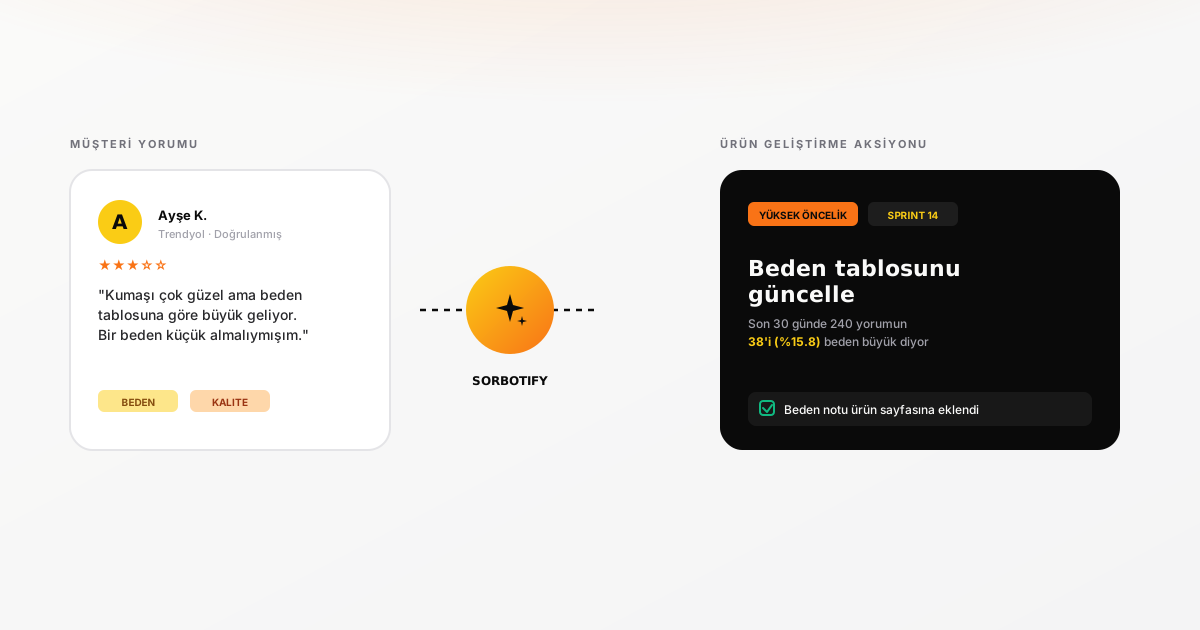
Turning customer reviews into product development actions
Most teams treat marketplace reviews as marketing data: five-star reviews for the storefront, one-star reviews for customer support.
But these reviews give you something no survey or focus group can: real words, from real customers, in real usage conditions.
Here is a concrete method for using marketplace reviews as product development (R&D) data.
1. Theme the reviews
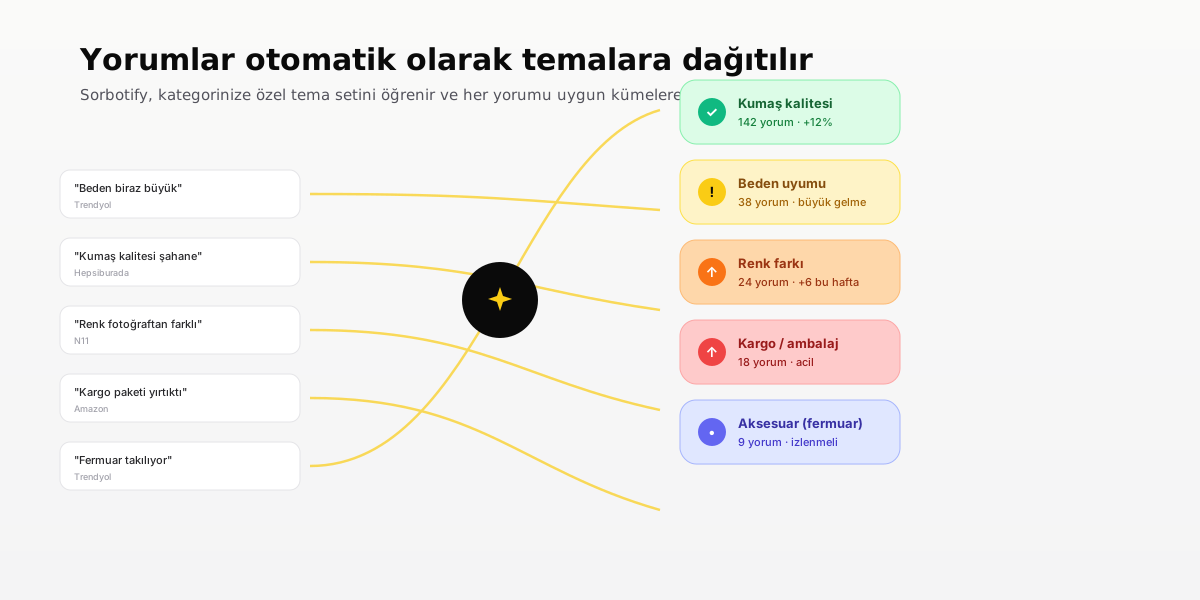
The first step is to cluster reviews by topic (theme). Typical themes for a clothing brand:
- Sizing (runs large / runs small)
- Fabric quality
- Color difference vs. photo
- Stitching & accessories (zippers, buttons)
- Packaging & shipping
- Price perception
For a kitchenware brand themes are different: durability, ease of cleaning, lid sealing, base grip, etc.
Sorbotify’s first job is exactly this: it auto-generates category-specific themes per brand and distributes reviews across them.
2. Move recurring complaints into the product backlog
Once a theme reaches a meaningful share, it is no longer a “complaint” — it is a product requirement.
Example:
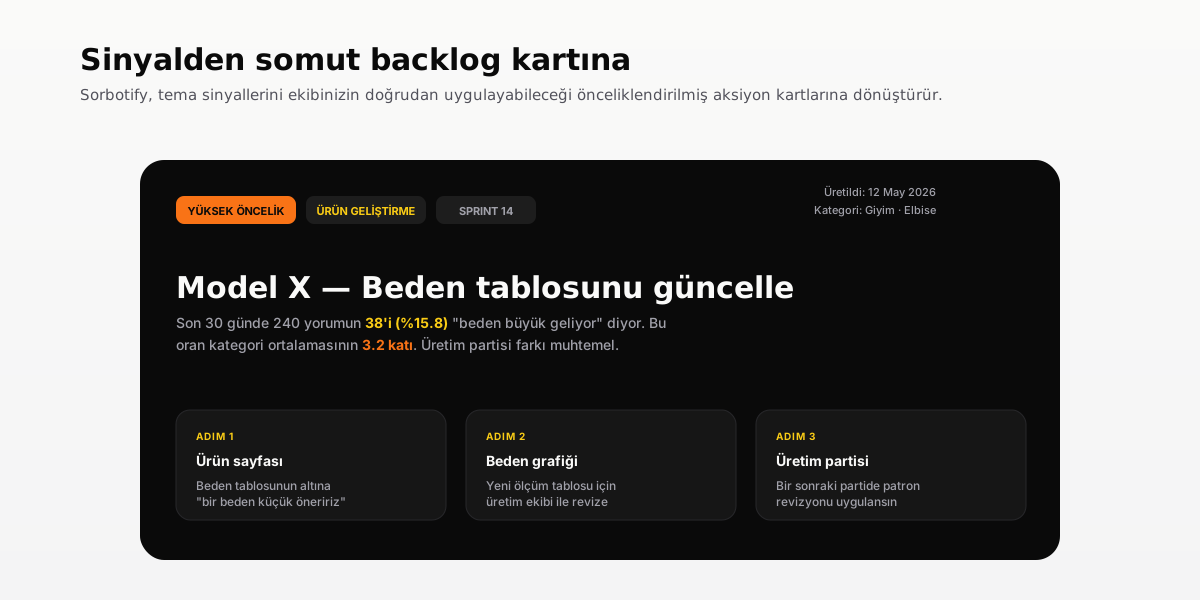
In the last 30 days, of 240 reviews for model X dress, 38 say “runs large.”
That’s a direct product development action:
- The size chart is revised together with production.
- An explanatory note is added to the listing’s size table.
- The next production run revises the pattern.
Sorbotify presents these prioritized product actions weekly.
3. Pull “things to preserve” from positive reviews
A common mistake while focusing on the negative: forgetting why the positive is positive.
For a kitchen scale, reviews saying “responds very fast” tell the manufacturer not to lower sensor sensitivity under cost pressure. A small cost-driven change can kill the actual reason for purchase.
Every month Sorbotify produces a “features to preserve” list for each brand. Product and operations teams keep this list in mind when making changes.
4. Don’t stop reading competitors’ reviews
Reviews on competing products are free user research for you. If a competitor’s customers say “it would be great if this also had X”, that’s an idea for your next version.
Reading these one by one is impossible. Sorbotify continuously monitors competing SKUs in the background and produces a weekly differentiation opportunities report.
5. The daily / weekly / monthly rhythm
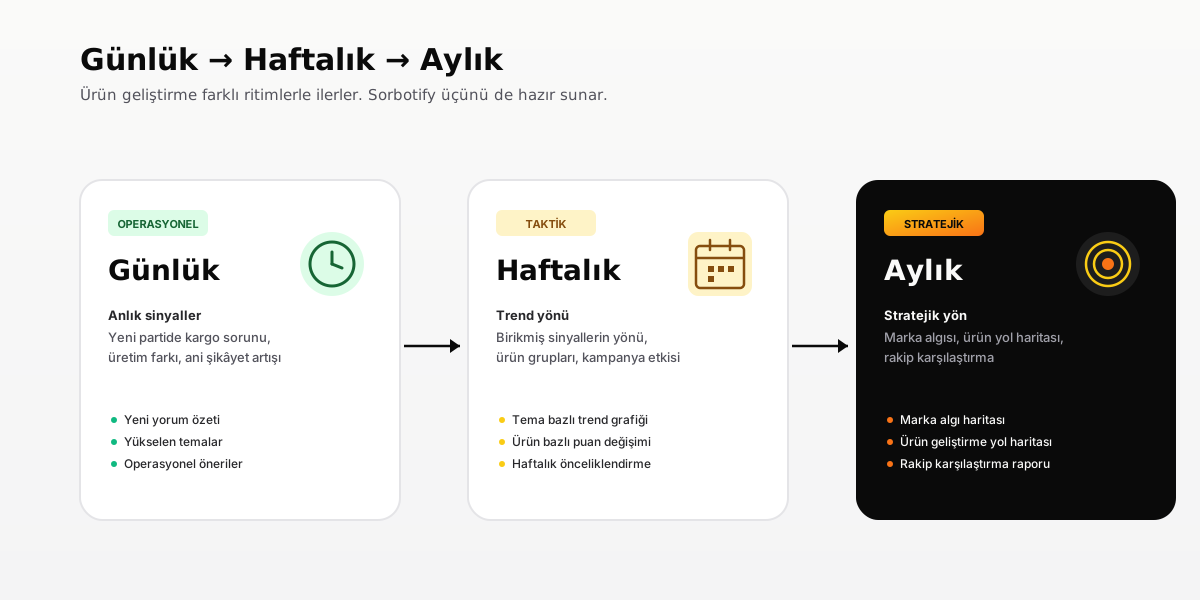
Product development moves at specific rhythms, not in a single day:
- Daily: operational signals (a shipping issue from a new batch, a production-batch deviation, etc.)
- Weekly: change in recurring themes (rising or falling?)
- Monthly: a strategic summary feeding the product roadmap and a competitor comparison
Brands that maintain this rhythm consistently use customer signals weeks before their competitors do.
Conclusion
Marketplace reviews bring data from real life that no research method can match. The only missing piece is the capacity to read that data.
Sorbotify provides that capacity. To start producing product development actions from your reviews, contact us directly: info@onarsoft.com.